Artificial intelligence
All case studies
- Industry
Industry 4.0 in food: MES and machine integration
A tailored MES for a food plant: from raw material acceptance to finished product, with data collected by operators or straight from the equipment.
The starting point
In food, traceability is not optional: every product must be traceable back to the raw material it came from, and every step must leave a reliable record.
In a plant with many departments, collecting this information by hand means paper, transcription and errors. The goal was to bring the system to where the work happens, on the shop floor, and have it talk to the equipment.
The activities the MES governs
- 1AcceptanceIncoming raw material is recorded, checked and identified with its lots.
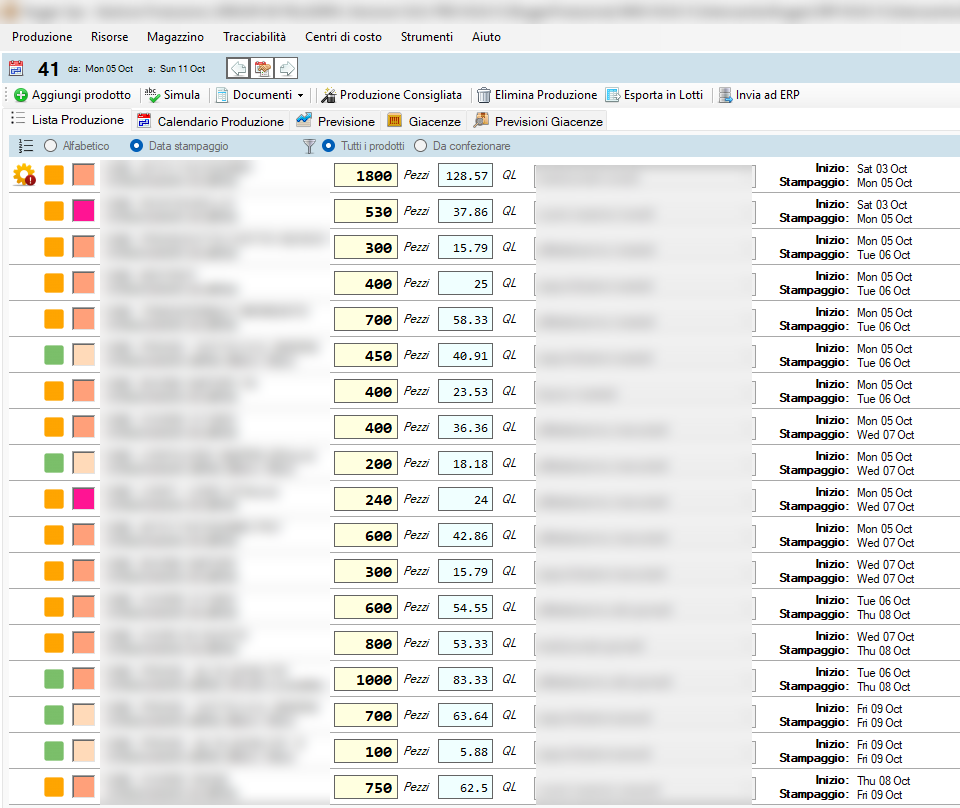
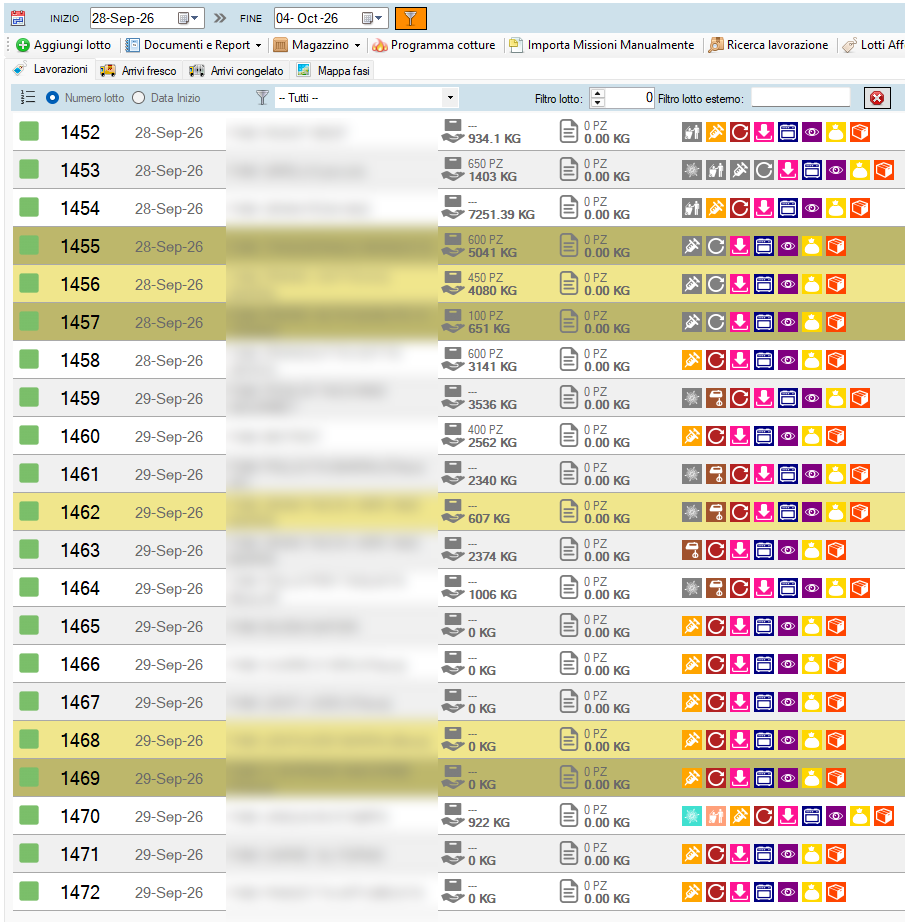
- 2Start of productionThe batch is created in the system, receives the right raw materials and is started in the departments.
- 3Managing every stepEvery operation is followed through to the finished product, with the batch status always up to date.
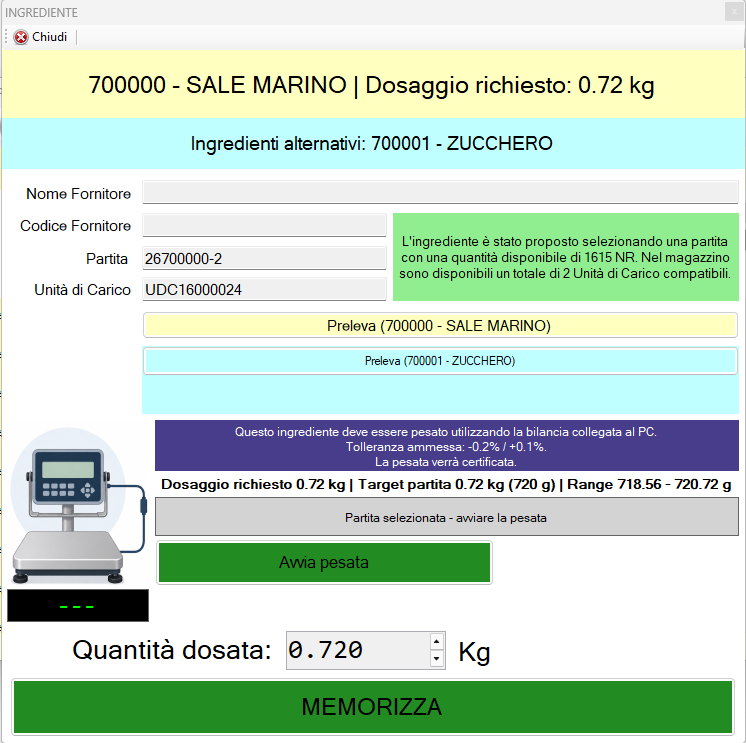
- 4Data collectionManual, by operators, or automatic, through interfaces with the equipment.
Everything stays linked: from the finished product you can go back to the original raw material, and the history of every batch is always available for quality and audits.
Two ways to collect data
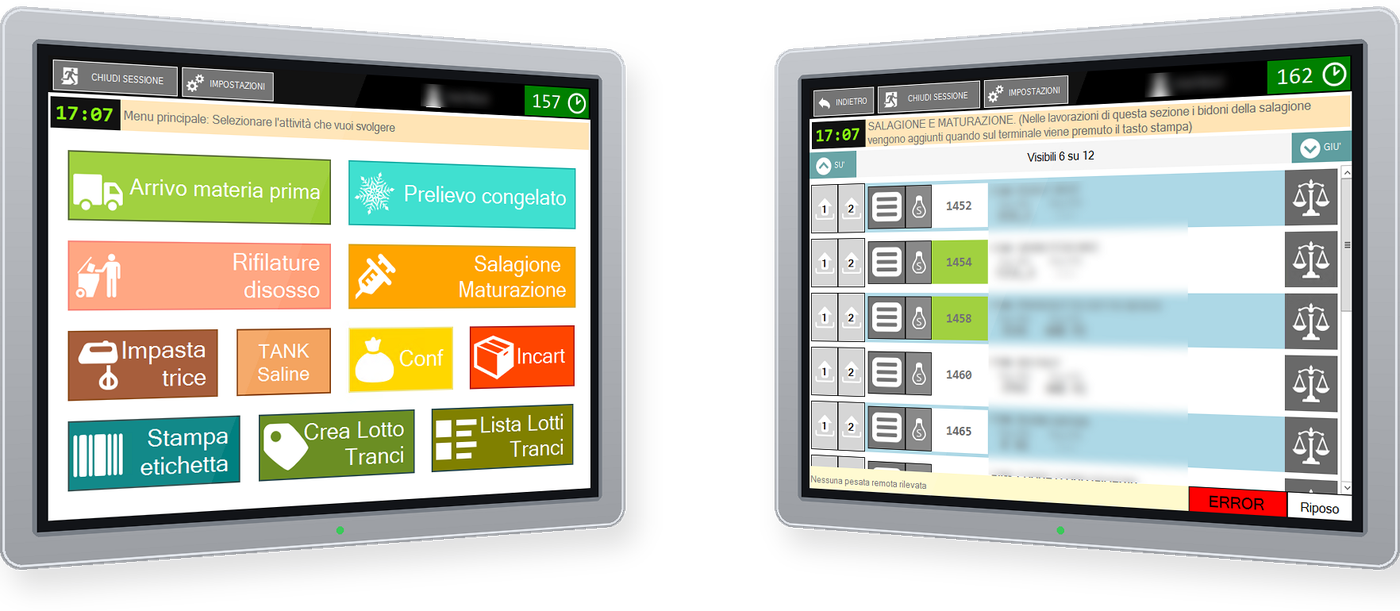
Where the operator’s eye is needed, data is entered on the floor; where it can arrive on its own, it comes from the equipment. The result is the same: a single database, with no transcription.
From operators
- Touch terminals at the line, with personal sign-in
- Few actions, only the information needed at that moment
- Checks and verifications recorded while working
From interfaces
- Scales, machines and equipment connected to the MES
- Warehouse and ERP aligned with production
- Data collected with no manual input
Industry 4.0, even where the machine is not enough
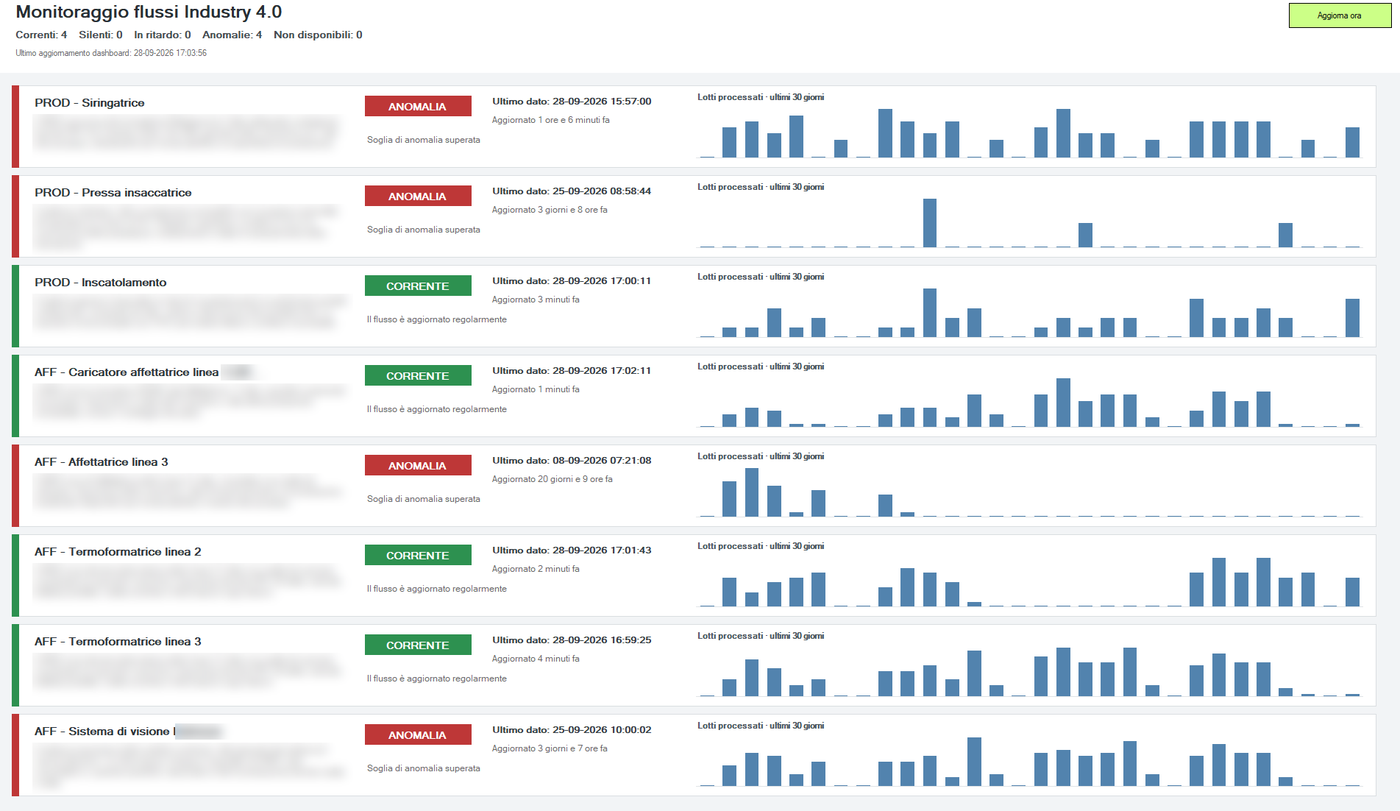
In several cases the MES is connected directly to machines through industrial protocols: the batch reaches the equipment and processing data comes back to the system, without being retyped.
Not all equipment, however, is built to talk. For these we developed tailored solutions based on Arduino, which interface with the PLCs and bring into the MES information that would otherwise be collected by hand.
Direct connectionMachines and equipment talking to the MES through industrial protocols such as OPC UA and Modbus.
Custom solutionsArduino-based devices we developed to interface the PLCs of older equipment.
Business systemsWarehouse and ERP receive and return production data, always aligned.
What changes
- Every finished product can be traced back to the original raw material.
- Less paper and less transcription: data is created where the work happens.
- Production status is visible in real time, on the floor and in the office.
- Even equipment that was not designed for it joins the system, through tailored interfaces.
More case studies
Artificial intelligence
Matching bookings and admissions in diagnostic imaging
Read the case study
Artificial intelligence
Asset inventory with image recognition
Read the case studyWe are always curious to hear how your needs are changing
Half an hour on Teams: you tell us where you are heading, we tell you frankly whether and how we can be of use.